There is a version of the wellness week that mistakes intensity for progress — a stacked itinerary of infusions and diagnostics, treatment after treatment, the guest leaving more wired than when they arrived. We think that version has the arithmetic wrong. The frontier protocols people fly to Tulum for only do their work if the body is in a state to receive them, and the body does its receiving at rest. Recovery is not the reward at the end of the programme. It is half the programme — the quiet half, and arguably the half that decides whether the rest of it lands.
So this is a piece about the parasympathetic side of the ledger: the massage table set up in the shade, the breathwork before breakfast, the sound bath that empties the afternoon, the sauna-and-plunge at dusk, and the eight hours of genuinely dark, genuinely quiet sleep that hold the whole thing together. Less biology, more sensation — which is rather the point.
Why recovery is half the protocol
The nervous system has two gears. One — the sympathetic, the ‘fight-or-flight’ gear — is the one most guests arrive stuck in, after months of travel, screens, deadlines and the low hum of being always slightly on. The other, the parasympathetic ‘rest-and-digest’ gear, is where the body actually does its housekeeping: where sleep deepens, where a hard training block or an ambitious treatment schedule gets absorbed rather than merely survived. A good recovery day is simply a deliberate down-shift from the first gear into the second — and everything in a well-built villa week is arranged to make that shift easier.
None of this asks you to believe anything exotic. Rest, warmth, slow breathing, water and darkness are the oldest tools we have, and a private villa happens to be an unusually good place to use them well — no waiting room, no schedule but your own, no reason to be anywhere at a particular hour.
The in-villa spa, reframed
Start with the massage, because it is the one everyone already understands — and then let it be more than a treat. Our therapists come to the villa: the table is set up wherever the light is best, often in the garden shade or on a shaded terrace with the ceiling fans turning, and the treatment is built around what your week actually needs. A slow, long-stroke massage on a rest day to coax the body toward that parasympathetic gear. A firmer, deep-tissue session to work out a training block. Lymphatic work — light, rhythmic, unhurried — for the mornings after travel when everything feels a little heavy and puffy and slow.
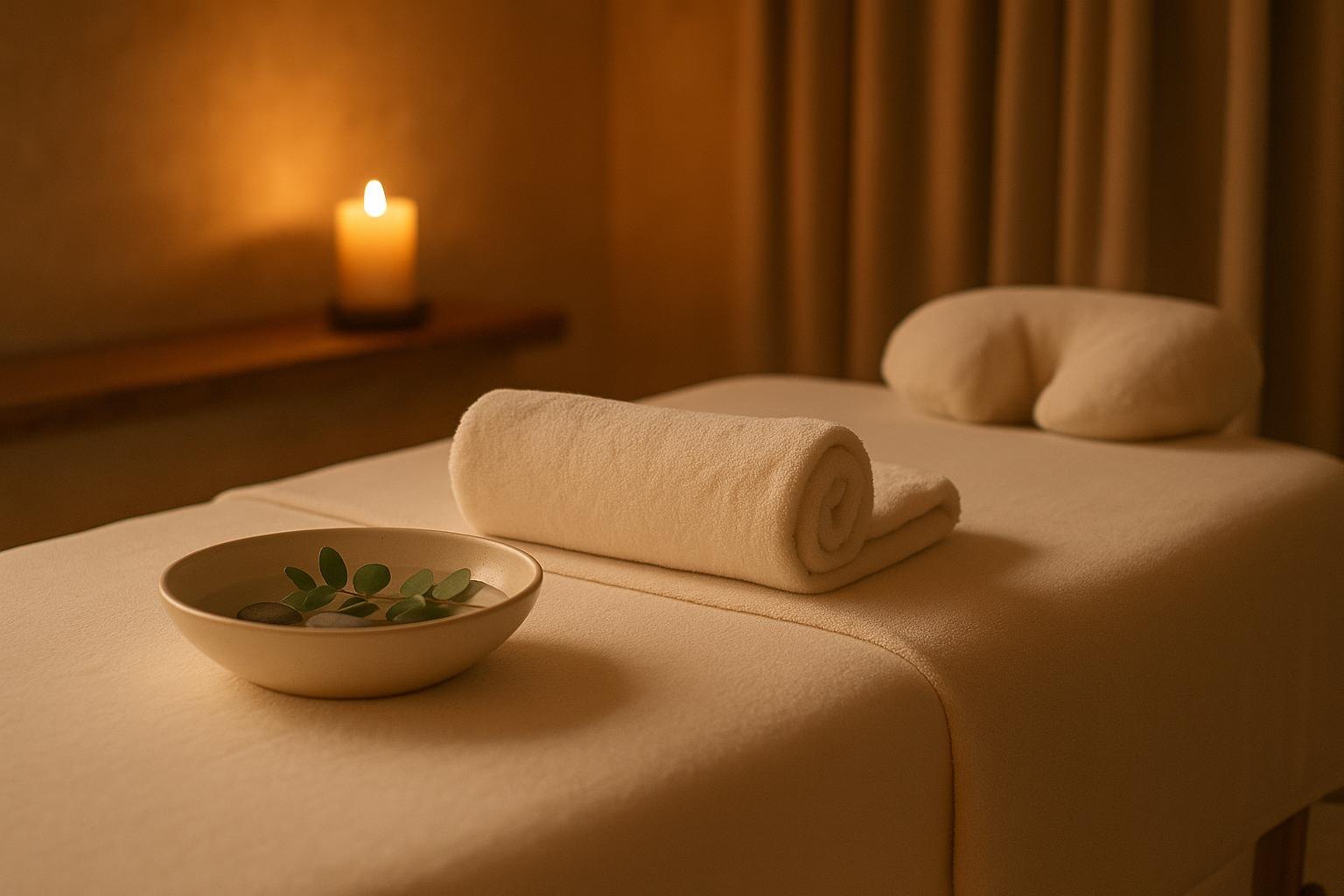
What changes in a villa is not the technique but the frame around it. There is no reception to check out of, no ten-minute buffer before you have to be dressed and gone. The treatment ends and you are already home — you fall into the pool, or into bed, and the calm has somewhere to go. That continuity, the absence of a hard edge between the treatment and the rest of the day, is most of why in-villa spa lands differently.
Massage & treatments in your villa
Deep-tissue, lymphatic and hot-stone work — therapists to the villa, the table wherever the light is best, no reception to leave.
See the in-villa spa →Breath, sound and the down-shift
The fastest way into that second gear is not a machine — it is the breath. A slow, guided breathwork session in the morning, before the day has a chance to speed up, is the simplest lever we have for nudging the nervous system toward calm; long exhales, in particular, are the body’s own signal that it is safe to settle. We keep it unhurried and entirely optional: some guests want a daily practice, some want one good session to remember how it feels.
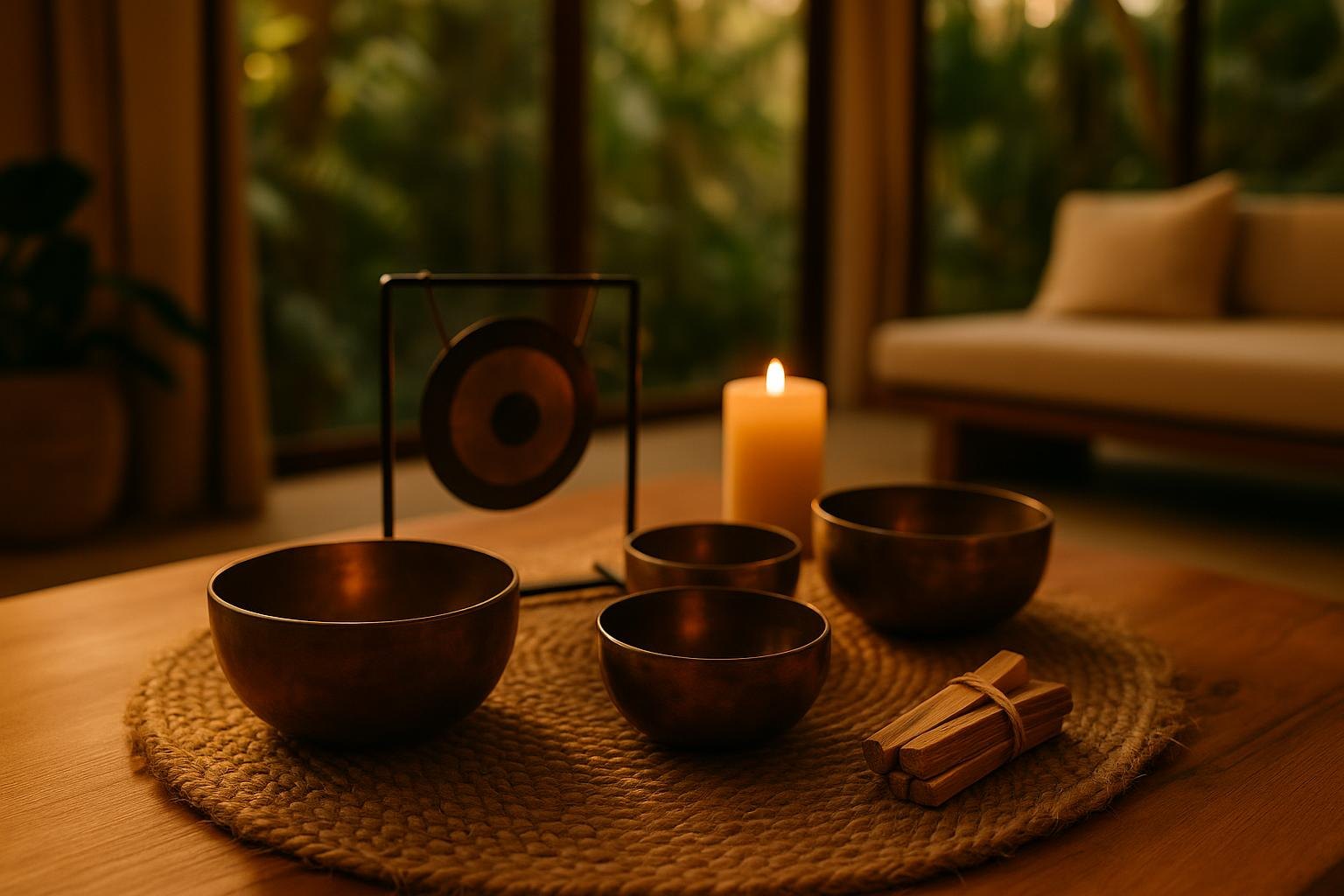
In the afternoon, sound. A sound bath — singing bowls, gong, the long overtones that seem to fill the whole room — asks nothing of you except to lie down and stop steering. Guests describe it, more than anything, as permission: an hour where there is nothing to optimise, nothing to measure, no phone. In a longevity week thick with data and decisions, that hour of deliberate un-productivity is not a soft indulgence. It is the counterweight that makes the rest sustainable.
Heat, cold and the contrast ritual
For guests who like their recovery a little more active, contrast — the old ritual of heat then cold — is the centrepiece of the evening. An infrared or traditional sauna to open everything up and bring on a deep, honest sweat; then the plunge, or the cold shower, or simply the pool if the day has been hot enough. The sensation is unmistakable: the sharp gasp of the cold, then the flood of warmth and clarity as the body rights itself. Many guests find the ritual helps them wind down toward a better night’s sleep, and most simply describe feeling clear-headed and calm afterwards — which, on a recovery evening, is the entire brief.
We treat it as a rhythm rather than a prescription: sauna, plunge, rest, repeat, at whatever intensity suits you, with water and shade close by. It pairs naturally with the massage on a bigger recovery day, and it makes a fine, unhurried way to close an evening before dinner from the private chef and an early night.
| Modality | Best for | When in the day |
|---|---|---|
| Lymphatic & slow massage | Travel days, the parasympathetic down-shift | Morning or midday |
| Deep-tissue & hot-stone | After a training block or long day | Afternoon |
| Breathwork | Settling the nervous system, focus | Early morning |
| Sound bath | Switching off, permission to stop | Afternoon |
| Sauna & cold plunge | Clear-headed calm before sleep | Dusk / evening |
Sleep is the treatment
If there is a single modality that quietly outperforms all the others, it is the one that costs nothing and photographs badly: sleep. Every part of a recovery day — the massage, the breath, the sound, the contrast ritual, the meal timed early and the screens set down — is, in the end, in service of the night. This is where a private villa has an unfair advantage. Bedrooms are genuinely dark and genuinely quiet; there is no corridor traffic, no neighbouring balcony, no front-desk call. You keep your own clock. You wake when the body is done, not when housekeeping arrives.
It is also the reason we sequence a week the way we do. The louder protocols — the ones covered in the rest of this series, from peptide and IV vitality to physician-led regenerative work — are, by design, investigational and not FDA-approved, and are offered screening-first and under medical supervision, paced to leave room around them. The recovery days are not the gaps between the real work. They are what lets the real work be absorbed. Build the week so the body can rest, and the frontier half has a body worth working with.
The whole thing is arranged before you land — therapists, breathwork and sound practitioners, the sauna, the chef, the shape of each day — and adjusted once you arrive and we see how you actually feel. If you would rather sketch the balance of restorative and frontier days yourself, our retreat builder is a good place to start.
Build the calm half of your week
In-villa massage, breathwork, sound and contrast — the parasympathetic side of a Tulum longevity stay, arranged around your villa and your clock.
Explore in-villa recovery & spa →