There is a particular kind of traveller arriving in Tulum now. Not sick — often the opposite of sick — but proactive, measured, and quietly obsessive about their own healthspan. They have read the studies, tracked their biomarkers, and decided that the next frontier of their wellbeing is worth crossing a border for. What they increasingly do not want is to receive it under fluorescent light, in a waiting room, in a paper gown. They want the science — and they want it delivered somewhere with a pool, a chef, a jungle, and the kind of sleep you only get when the road outside is silent. That instinct, it turns out, is now a whole category.
What ‘frontier wellness’ actually means
The wellness economy reached a record $6.8 trillion in 2024 and is forecast to approach $9.8 trillion by 2029, and the fastest-growing corner of it is the most medical: the Global Wellness Summit names the high-tech longevity clinic as the single fastest-growing business genre in wellness, with more than a thousand such clinics now operating worldwide. The modalities that define this frontier are familiar to anyone who follows the field — regenerative and stem-cell therapy, peptides, NAD+ infusions, hyperbaric oxygen, and deep diagnostics that measure biological age across hundreds of biomarkers. The honest framing matters here, and we hold to it throughout this journal: most of these are investigational. Several are not approved by the FDA and are offered outside the United States precisely for that reason, always under the supervision of a licensed physician and only after individual screening. We describe the experience and the setting, never a medical outcome.
Hardcare, in a softcare setting
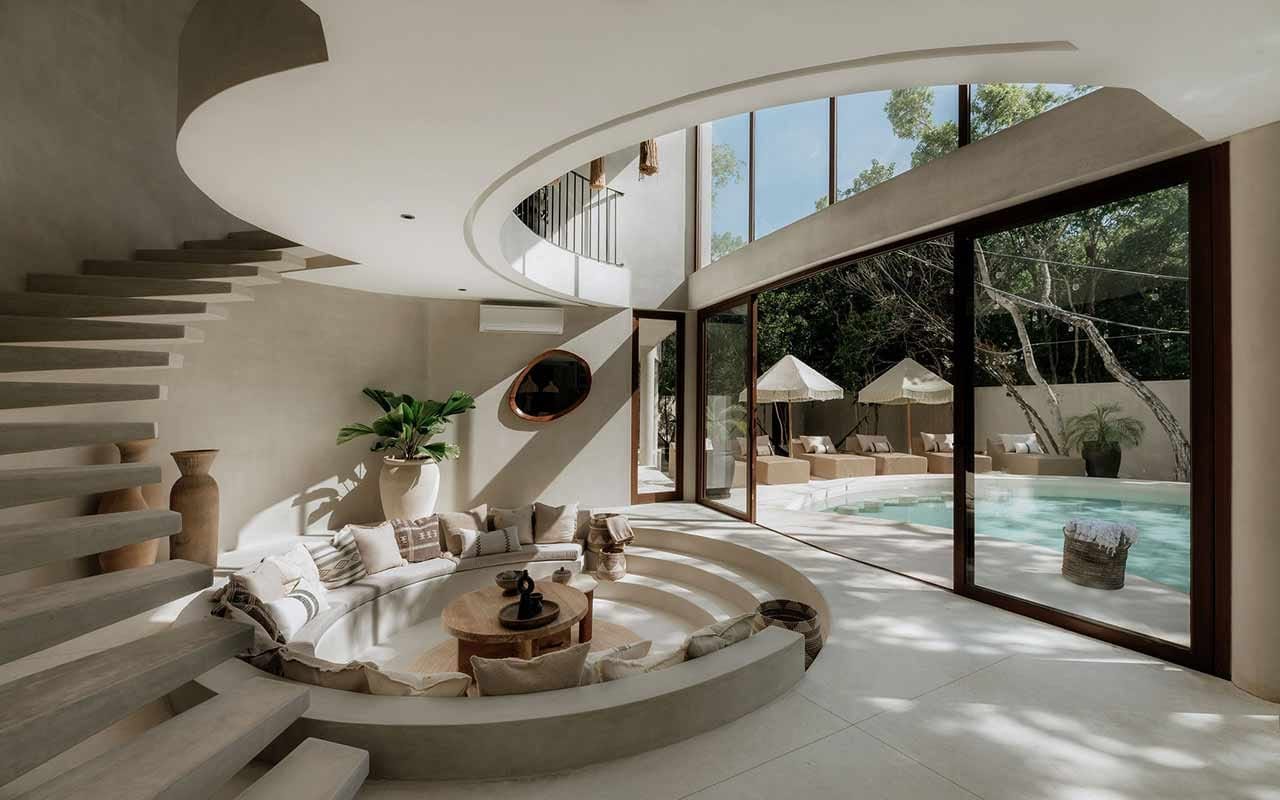
The Global Wellness Institute has a useful pair of words for this moment. ‘Hardcare’ is the new hyper-medical, high-tech, expensive end of wellness — longevity clinics, cellular therapy, advanced diagnostics. ‘Softcare’ is the calm, restorative, emotionally intelligent end — rest, nourishment, nervous-system downtime. The interesting design problem, and the one a private villa is uniquely built to solve, is bringing the two together: serious medicine, zero clinical anxiety. The industry itself is converging on the same idea. Operators are building medical wings directly into ultra-luxury resorts so guests never leave the comfort of their stay; Sam Nazarian and Tony Robbins have launched a longevity-anchored hospitality group with a Clinique La Prairie hub and openings from 2026. The direction of travel is unmistakable. A villa simply occupies the most intimate, most private end of that same wave.
Why Tulum, and why Mexico, is a real hub
This is where the story stops being marketing and becomes substance. Mexico’s health regulator, COFEPRIS, legally permits the cultivation, storage and administration of expanded human mesenchymal stem cells under the country’s General Health Law — the very thing US regulation restricts. The practical consequence is a genuine trifecta: legal access to therapies not available at home, dramatically lower cost, and a short flight into Cancun with a ninety-minute drive south to Tulum. Independent guides put stem-cell protocols in Mexico at roughly a third to a fifth of comparable US pricing, with COFEPRIS-licensed laboratories and internationally trained physicians now clustered across the Riviera Maya. The Bahamas is legislating toward the same position; Switzerland’s Clinique La Prairie remains the prestige ceiling at packages reported near $55,000. Tulum’s case is quieter and more grounded: the access is real, the setting is extraordinary, and the flight is short.
The thesis: recovery is better where rest is possible
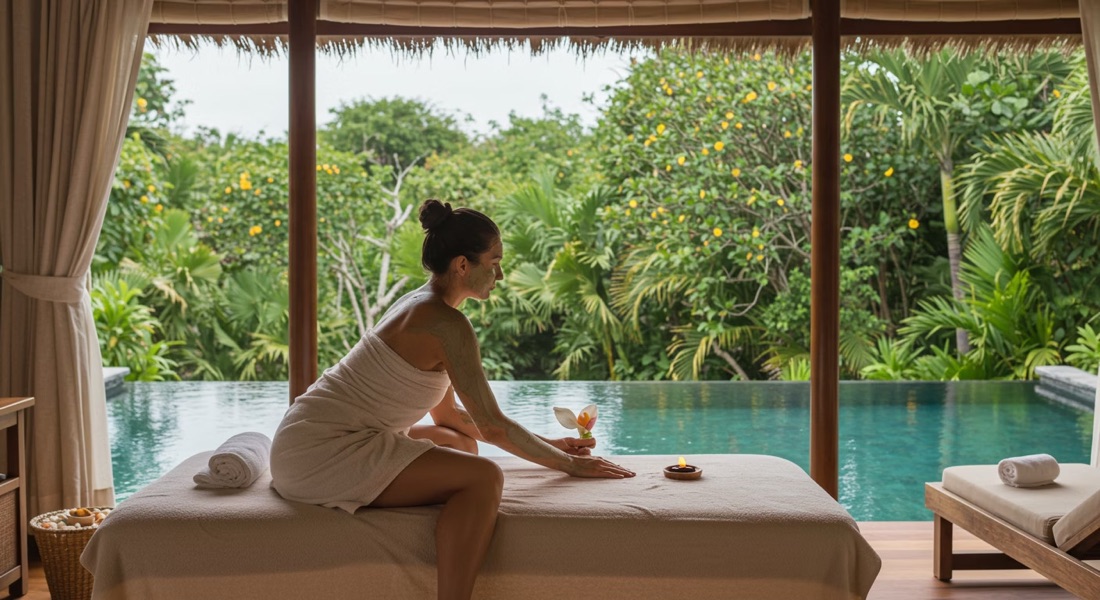
Here is the belief the SEVA approach is built on. When a protocol is elective and the results depend on how well the body recovers, the environment is not a luxury — it is part of the design. A calm, non-clinical setting is where rest actually happens: real sleep in a genuinely dark, quiet room; a private chef cooking to your brief rather than a hospital tray; jungle and water instead of a corridor and a car park; and the privacy to keep your own clock, eat when you choose, and be silent when you want to be. None of this replaces medical supervision — it sits alongside it. The clinical work is led by licensed physicians; the villa provides the conditions in which the days after a treatment are restful rather than depleting. We make no promise about biology. We are confident about the setting.
Physician-led regenerative wellness, explained honestly
Stem-cell and regenerative modalities are screening-first, physician-supervised, and — where true — not FDA-approved and offered outside the US. Read exactly how the SEVA approach handles them.
Explore regeneration →The team comes to you
The delivery model is what makes any of this possible in a villa, and it is now mature. A vetted, physician-led medical team brings the modalities to the guest — IV vitality and NAD+ infusions, diagnostics and on-site labs, treatment overseen by licensed clinicians — rather than the guest travelling to a clinic and back. Most infusions take a comfortable half-hour to a few hours; there are no waiting rooms and no strangers. Every service begins with a medical screening, because not every guest is a candidate, and that screening is a feature, not a formality. The difference guests describe is simply this: the treatment happens between the pool and the garden, and then you are already home.
How the pieces fit together
| The clinic model | The private-villa model |
|---|---|
| A waiting room and a paper gown | Your own room, your own clock |
| You travel to the treatment | The physician-led team comes to you |
| Recovery in a hotel, alone | Recovery with a chef, a pool and real sleep |
| One-size protocol | Screening-first, built around you |
| Medical competence, clinical anxiety | Medical supervision, genuine calm |
This piece is the hub of a short series. From here, the deeper dives go in three directions: the vitality modalities — peptides and NAD+ — delivered in-villa; the regenerative and stem-cell side and how Mexico’s regulation actually works; and the quieter spa and recovery work of resetting an overstretched nervous system. A private chef and the right villa are the constants underneath all three.
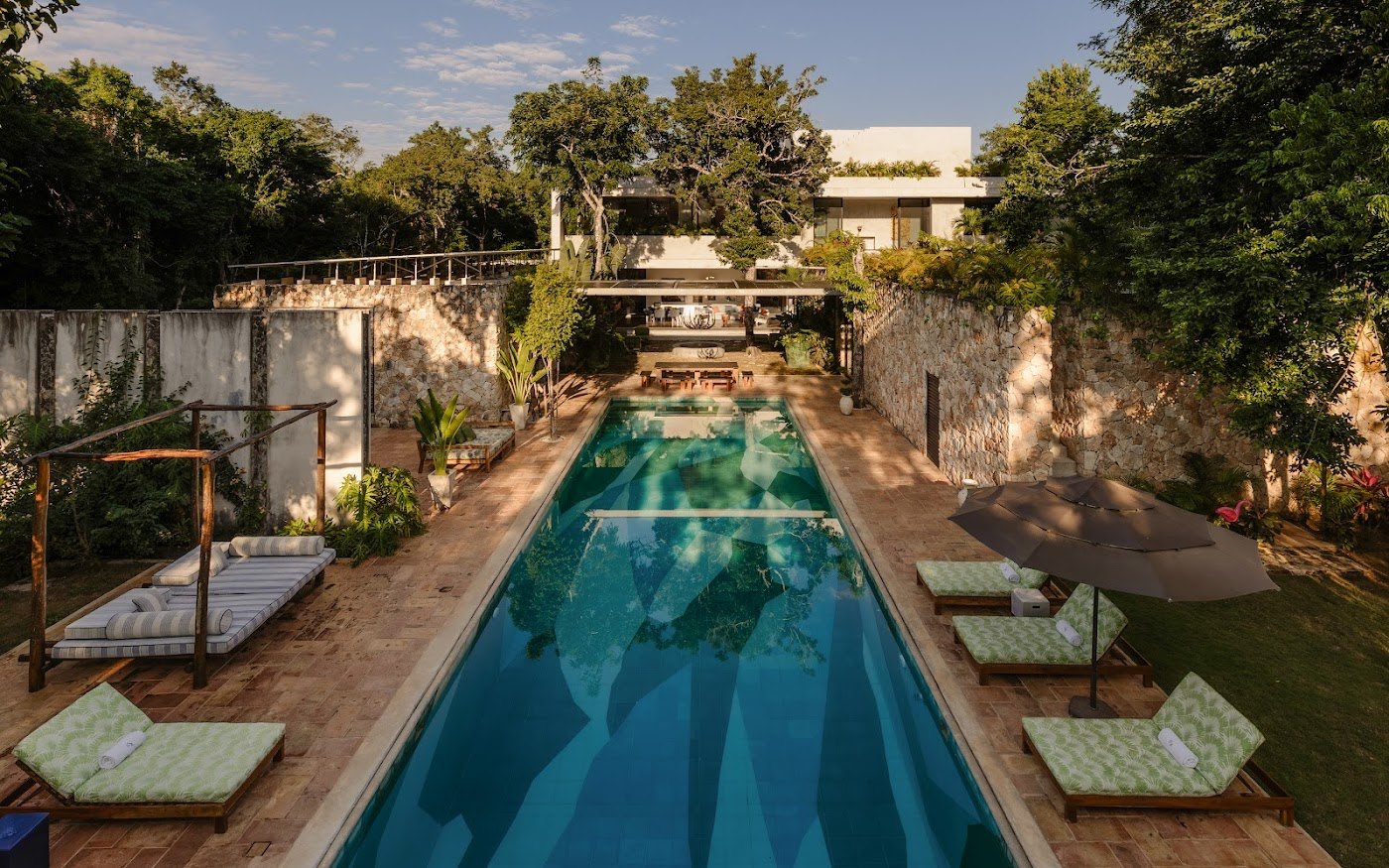
The point of the whole model is restraint. We do not oversell the biology, and we do not pretend a villa is a hospital. What we can build, honestly and well, is the calm around the care — the screening-first process, the physician-led team that comes to you, and a week engineered for rest. If you want to shape that week yourself, the retreat builder is the place to start.
Build a physician-supervised wellness week around your villa
Choose your setting, then layer in vitality and regenerative modalities — each one screening-first and physician-led. Start with the retreat builder and we will handle the rest.
Open the retreat builder →